
Here’s how and why you should boil your tofu before using it. Boiling tofu before using it in recipes is a technique that can significantly enhance its texture, flavor, and overall quality. It’s not for every use, but it works for many.

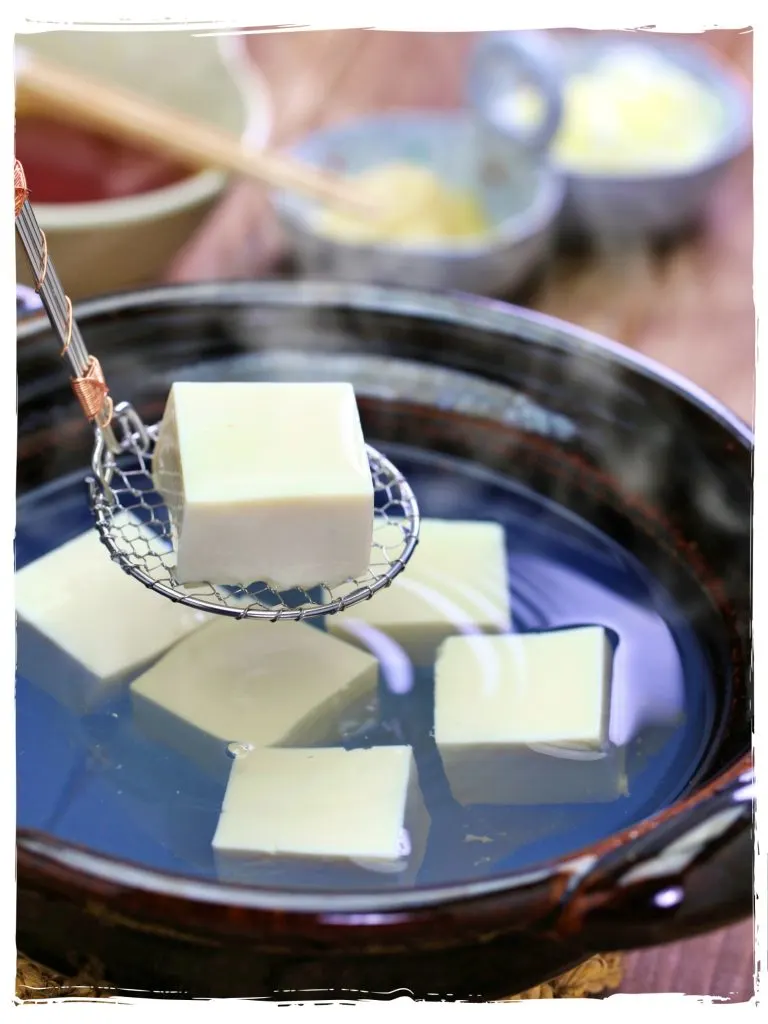
Why Boil Tofu?
1. Improves Texture
Boiling tofu can help firm up its texture, making it less likely to crumble during cooking. This is particularly good for dishes where the tofu needs to maintain its shape, such as stir-fries, on skewers, or in stews. The boiling process also removes excess water from the tofu, giving it a more satisfying, chewy, “meaty,” texture.
- Firm and Extra-Firm Tofu: These types of tofu are going to benefit most from boiling as it makes them even firmer and more resilient during cooking.
- Silken and Soft Tofu: While generally used for soups, smoothies, and desserts, sometimes boiling can still help by slightly firming the tofu, making it easier to handle. For smoothies and desserts it’s best not to boil. But for use in soups and other dishes it can improve the texture and make it less fragile.
2. Enhancing Flavor Absorption
Tofu, as everyone knows, is naturally bland and acts like a sponge, soaking up flavors from marinades and sauces. Boiling tofu removes a lot of the water and “opens up its pores,” making the tofu more absorbent and receptive to these flavors. This results in a more flavorful dish as the tofu will really soak up marinades and seasonings.
- Add Flavors During Boiling: During the boiling process, any flavoring or spices can be added to the water and the tofu will soak it right up. Salt, soy sauce, pepper, and really any spices or flavorings can be added dring the boiling process and the tofu will take on that flavor. Simply add whatever is going to enhance your final recipe.
- Marinating Post-Boiling: After boiling, tofu can be marinated in any marinade … a mixture of soy sauce, ginger, garlic, and other spices is a good choice. This ensures every bite is packed with flavor, transforming tofu from a neutral ingredient into a delicious component of your dish.


3. Removing Impurities and Off-Flavors
Tofu can sometimes have a slightly beany or unpleasant taste, especially if it’s not very fresh. Boiling helps eliminate these off-flavors, resulting in a cleaner, more neutral base for your recipes. It also removes any potential impurities from the packaging or manufacturing process.
4. Improving Digestibility
Tofu is a bean, after all. And some people can have a hard time digesting it. Boiling tofu can make it easier to digest and reduce any stomach problems from it. The heat from boiling breaks down some of the complex proteins and carbohydrates in the tofu, making them more accessible for your body to process.
5. Enhancing Safety
While tofu is generally safe to eat straight from the package, boiling adds an extra layer of food safety by eliminating any bacteria that might be present. This is particularly important if you’re using tofu in salads or other raw preparations.


How to Boil Tofu
Boiling tofu is a simple and straightforward process. Follow these steps to ensure your tofu is perfectly prepared:
1. Choose the Right Tofu
Select the type of tofu that best suits your recipe. Firm and extra-firm tofu are ideal for most savory dishes, while silken and soft tofu are better for soups and desserts.
2. Drain and Press the Tofu
Remove the tofu from its packaging and drain off the excess water. Press the tofu between paper towels or a clean kitchen towel to remove as much moisture as possible. You can use a tofu press or place a heavy object on top of the wrapped tofu for 15-30 minutes.
3. Cut the Tofu
Cut the tofu into the desired shape and size for your recipe. Cubes, slices, or strips are common options.
4. Prepare the Boiling Water
Fill a pot with enough water to fully submerge the tofu. Optionally, add a pinch of salt to the water for added flavor. Bring the water to a boil over medium-high heat.
5. Boil the Tofu
Carefully add the tofu to the boiling water. Let it boil for about 5-10 minutes. The boiling time can vary depending on the texture you want to achieve:
- 5 Minutes: For a slightly firmer texture.
- 10 Minutes: For a more substantial, chewy texture.
6. Drain and Cool
After boiling, carefully drain the tofu in a colander. Let it cool for a few minutes before handling. This cooling period also allows the tofu to firm up slightly.
7. Marinate or Cook as Desired
Once cooled, the tofu is ready to be used in your recipe. For enhanced flavor, marinate the boiled tofu in your favorite sauce or seasoning mix for at least 30 minutes. Then, cook it according to your recipe’s instructions.


Tips for Perfect Boiled Tofu
- Use Fresh Tofu: The fresher the tofu, the better the final texture and flavor will be.
- Don’t Overboil: Overboiling can make tofu too firm and rubbery. Stick to the recommended boiling times.
- Experiment with Flavors: Add herbs, spices, or a splash of soy sauce to the boiling water to infuse additional flavors into the tofu.
Boiling tofu is a simple yet effective way to enhance its texture, flavor, and overall quality, making it a versatile and delicious addition to a wide range of dishes.


Hello! I’m Lisa, a vegan artist, photographer, author, Vegan Life Coach Educator, and RYT 200 yoga teacher. I love showing others how simple and delicious a plant-based diet can be. I draw and paint, cook, write, take lots of pics, eat lots of chocolate, and practice gratitude daily.
When you say to boil it for 5-10 minutes, do you mean at a rolling boil like pasta, or more of a gentle boil or simmer?
A gentle boil is enough. Let me know how you like this technique!
Can it be boiled in broth?
It can and adds flavor. You can also slice or cube tofu before boiling in broth so there’s even more surface to soak up the flavor.
I have been trying to fix tofu to eat and it always turns out terrible. I never knew that you should boil it first. I’m going to try that to see if it will make a difference. I don’t seem to be able to fix it to be eatable. lol or maybe it’s just me! Lol
Try it! One of the things that’s awesome about tofu is that it doesn’t taste like much on its own, but it soaks up all kinds of flavor. So you can boil it in water or you can boil it in broth and after that air fry it and then toss it with a tasty sauce and you’ve got tons and tons of flavors.